Communication Tools for Around the Home
The hardest moments at home are often not about behavior. They are about not being understood. A child melts down because they cannot explain what hurts. An adult recovering from a stroke knows exactly what they want to say but cannot retrieve the words. A family member with autism may understand far more than they can express in the moment.
When communication breaks down during daily routines, stress builds quickly for everyone involved. Introducing functional communication tools for around the home can make daily life calmer, clearer, and more connected.
What Counts as a Communication Tool?
A communication tool is any resource that helps a person process language (receptive language) or express a message (expressive language). In clinical settings, these systems are known as Augmentative and Alternative Communication (AAC).
According to the American Speech-Language-Hearing Association (ASHA), AAC tools do not hinder spoken language development; instead, they provide a linguistic bridge that reduces cognitive fatigue and frustration (1).
The goal of home-based tools is not to make your house look like a clinical therapy office, but to embed highly accessible, low-friction visual and physical supports exactly where communication happens.
The Continuum of Home Communication Tools
Effective communication support ranges from simple environmental adaptations to advanced technology. The best system is always the one that the individual and their communication partners can use naturally under stress.
Tool Category
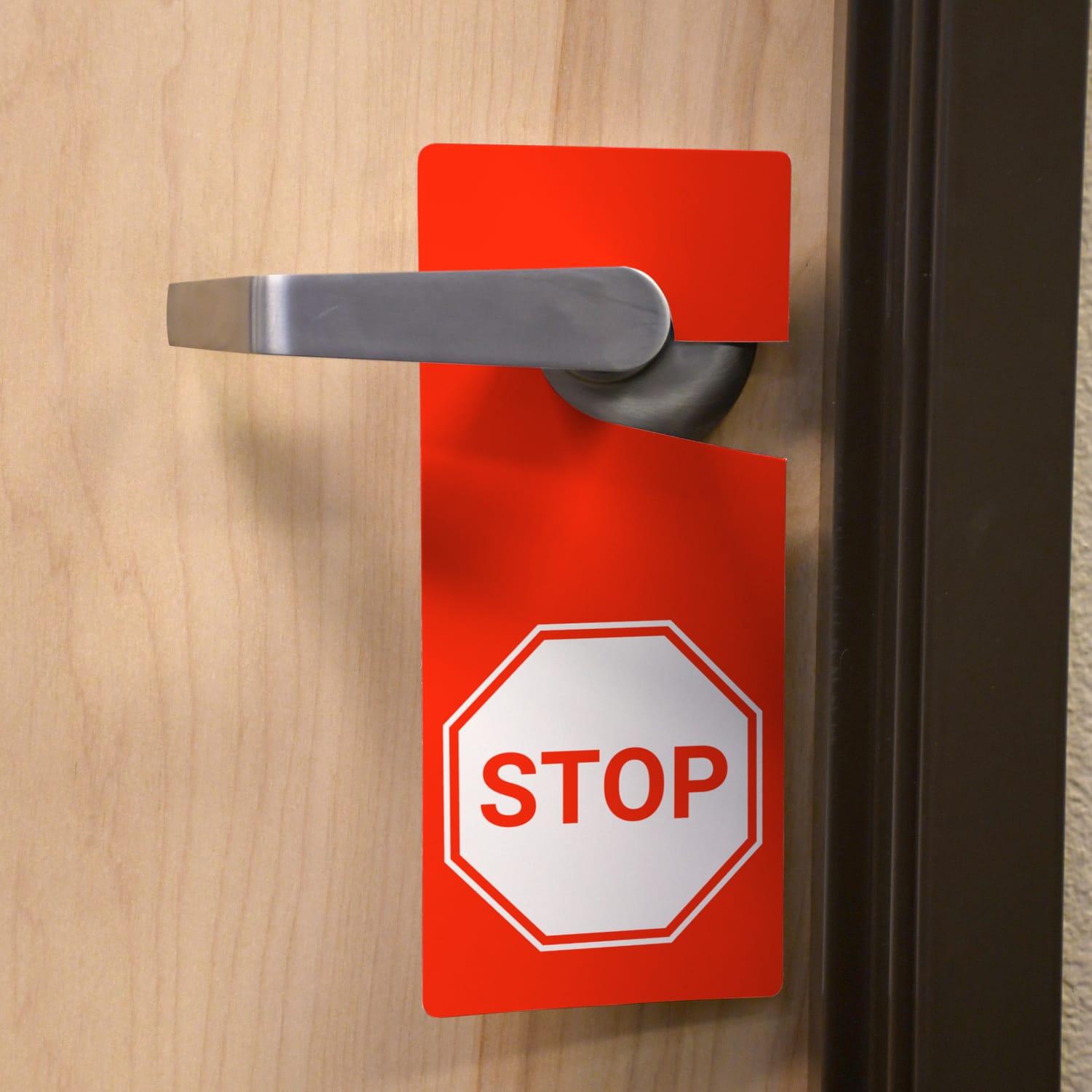
No-Tech / Environmental
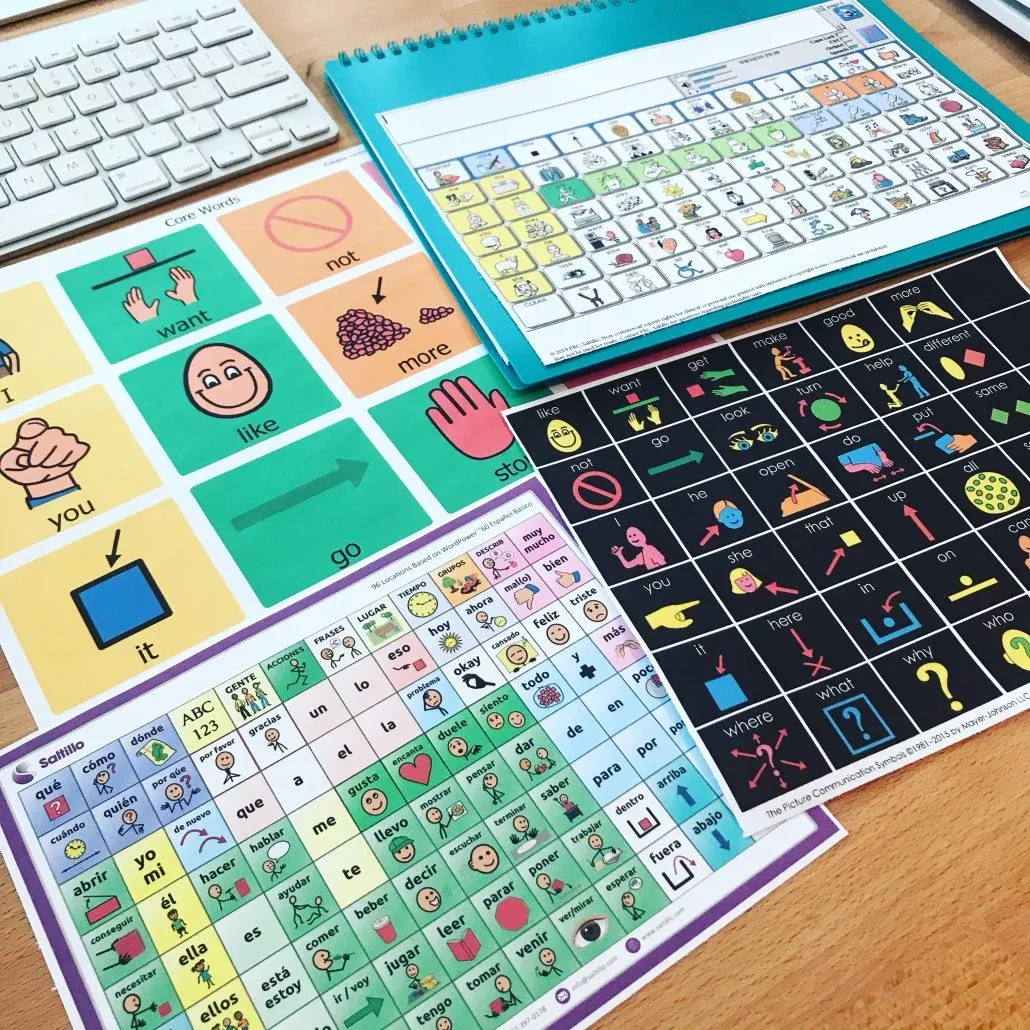
Low-Tech / Light-Tech
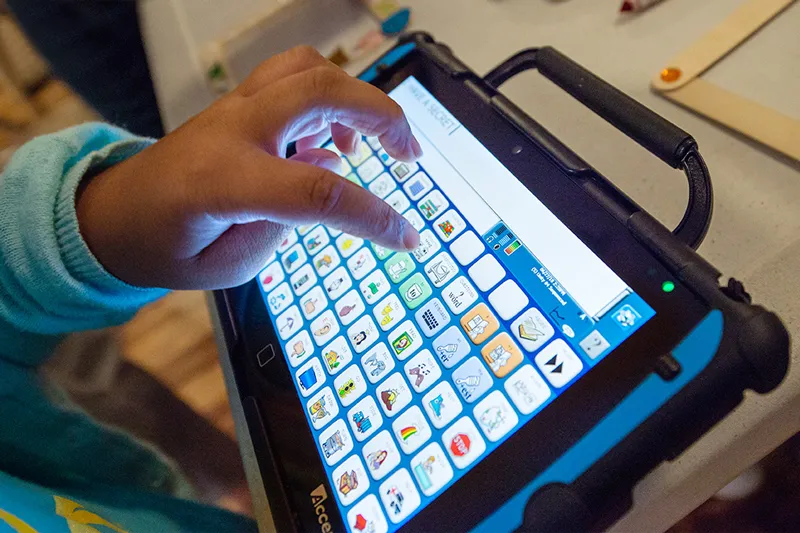
High-Tech / Dedicated
Clinical Examples
Environmental labeling, physical boundaries, object schedules.
Printed PECS (Picture Exchange Communication System) cards, dry-erase boards, first-then boards, emotion charts, choice boards (2).
Speech-generating devices (SGDs), tablets equipped with robust AAC software (e.g., Proloquo2Go, TouchChat), text-to-speech apps (3).
Best Used For
Real-object identification, spatial orientation, early cognitive support.
Quick requesting, routine sequencing, making distinct choices without tech barriers.
Complex sentence building, robust expressive language, independent communication across environments.
Why Language Needs a Visual Form at Home
Speech is temporary. Once a verbal direction is spoken ("Go put your shoes on, grab your backpack, and wait by the door"), the auditory signal vanishes. For individuals with auditory processing delays, executive functioning deficits, or post-stroke aphasia, tracking rapid verbal speech is incredibly draining.
Visual supports give language a permanent, static form. Research shows that visual schedules and routine cards lower cortisol levels and behavioral resistance during high-stress transitions (4). When an individual can look at a visual sequence, their working memory doesn't have to work twice as hard to figure out what comes next.
Room-by-Room Setup for Natural Connection
To make communication tools sustainable, store them directly at the point of use.
1. The Kitchen & Dining Area
This area centers on choice-making and requesting.
Place a magnetic choice board on the refrigerator displaying available snacks, drinks, or meals. This allows toddlers, autistic individuals, or adults with expressive deficits to point or hand a picture card to a caregiver instead of guessing.
Use environmental labeling (words paired with simple icons) on the outside of pantry doors or drawers to promote independent navigation.
2. The Bathroom
Privacy and dignity are paramount in this space.
Laminated, step-by-step visual routine sequences for handwashing, toileting, or showering allow individuals to complete multi-step hygiene tasks independently without requiring a caregiver to give repetitive verbal prompts.
Hang a simple, waterproof pain scale or body chart near the medicine cabinet so an individual can easily point to communicate exactly where they feel physical discomfort or illness (5).
3. Bedrooms & Living Spaces
Implement a First-Then board in the living area to clearly map out expectations (First homework, Then iPad).
Dedicate a consistent, highly visible "parking spot" or charging station for high-tech AAC devices so they are never lost under blankets or cushions when an individual needs to speak.
Common Implementation Pitfalls to Avoid
- Introducing Too Much Too Fast: Families often start with incredible enthusiasm and print out five different visual schedules simultaneously. This causes system overload. Start by targeting one single routine that causes the most daily friction (e.g., the morning routine) and master it before adding more tools.
- Treating the Tool Like a Test: Communication supports are not flashcards. If a child points to a picture of an apple, do not force them to also say the word aloud before giving it to them. Acknowledge and honor all forms of functional communication—whether it is a gesture, a vocalization, a picture, or a high-tech button press.
- Withholding the Tool as a Punishment: An individual's communication system (like a tablet app or choice board) is their voice. It should never be confiscated or withheld as a behavioral consequence.
When to Seek Expert SLP Guidance
If communication barriers are regularly leading to meltdowns, mealtime safety concerns, behavioral shutdowns, or a loss of independence, a comprehensive speech-language evaluation is the most strategic next step.
What looks like behavioral non-compliance or a lack of motivation is frequently an underlying mismatch between the individual's processing capacity and the communication expectations placed on them (6). A specialized SLP can precisely evaluate an individual's cognitive-linguistic profile to match them with the exact low- or high-tech tools they need.
For families across the Tampa Bay region balancing busy schedules, finding time for these evaluations can be tough. This flexibility is essential for busy families when they are not able to do in-person clinic work in St. Petersburg or in-home/mobile clinic sessions in Pasco, Pinellas, or Hillsborough County.
At Words in Motion Therapy, we provide personalized, concierge speech therapy tailored to the unique rhythms of your household. Whether through direct in-home training in New Port Richey, virtual AAC coaching, or utilizing our mobile therapy unit, we give your family practical, everyday tools designed to reduce frustration and let connection grow.
References
1.) American Speech-Language-Hearing Association. (2025). Augmentative and alternative communication (AAC) overview. www.asha.org/public/speech/disorders/aac/
2.) Bondy, A., & Frost, L. (2001). The Picture Exchange Communication System. Behavior Modification. www.journals.sagepub.com/doi/10.1177/0145445501254002
3.) Light, J., & McNaughton, D. (2014). Communicative competence for individuals who require augmentative and alternative communication: A total linguistic framework. Augmentative and Alternative Communication. www.tandfonline.com/doi/full/10.3109/07434618.2014.905596
4.) Meadan, H., et al. (2011). Using visual supports with young children with autism spectrum disorders. Teaching Exceptional Children. www.journals.sagepub.com/doi/10.1177/004005991104300601
5.) Hicks, C. L., et al. (2001). The Faces Pain Scale-Revised: Toward a common metric in pediatric pain measurement. Pain. www.journals.lww.com/pain/Abstract/2001/08000/The_Faces_Pain_Scale_Revised__Toward_a_common.21.aspx
6.) Prizant, B. M., et al. (2006). The SCERTS Model: A educational framework for language and emotional regulation. Paul H. Brookes Publishing. www.scerts.com/framework-rationale/
Subscribe now.
Sign up for our newsletter to blog posts directly to your e-mail!
CATEGORIES
Created with ©systeme.io• Privacy policy • Terms of service