Professional virtual therapy for all ages, available anywhere in the United States. Now offering expert in-person support across Pasco, Pinellas, Hernando, Hillsborough, and Polk counties.
Pragmatic Therapy That Meets You Exactly Where You Are.
At-a-Glance
Words in Motion provides social communication and pragmatic language therapy in St. Petersburg for children, teens, and adults who need support using language successfully in real-life social situations. Services are provided by a licensed Speech-Language Pathologist, MS, CCC-SLP, with appointments available in office at our St. Petersburg clinic, through our mobile clinic across West-Central Florida, and virtually when appropriate.
Social communication therapy may support skills such as conversation, perspective-taking, flexible thinking, problem-solving, self-advocacy, emotional language, friendship skills, group participation, and understanding social expectations. Contact Words in Motion today to schedule a free consultation.
What is Social Communication and Pragmatic Language?
Social communication, also called pragmatic language, refers to how we use language to interact with others. It includes what we say, how we say it, when we say it, and how we adjust our communication based on the person, setting, and situation.
Pragmatic language skills may include starting and ending conversations, staying on topic, taking turns, asking questions, understanding body language, recognizing tone of voice, repairing communication breakdowns, making inferences, understanding humor, and knowing how to participate in different social settings.
Some individuals need support with social communication due to autism, ADHD, language disorders, developmental delays, traumatic brain injury, social anxiety, cognitive-communication difficulties, or general challenges navigating peer or workplace interactions.
Social communication therapy is not about forcing someone to mask, erase their personality, or act “less autistic.” At Words in Motion, therapy focuses on helping clients communicate clearly, advocate for themselves, understand others, and participate more successfully in the situations that matter to them.
Why Choose a Licensed SLP for Social Communication Therapy?
A licensed Speech-Language Pathologist is trained to evaluate and treat language, communication, and cognitive-communication skills across the lifespan. At Words in Motion, therapy is provided by an SLP with a Master’s degree and CCC-SLP certification, reflecting advanced clinical training and national professional standards.
Social communication is more than “manners” or “social skills.” It involves language comprehension, expressive language, perspective-taking, problem-solving, executive functioning, emotional regulation, nonverbal communication, and the ability to understand context.
Words in Motion provides social communication therapy:
In office at our St. Petersburg clinic
Through our mobile clinic across West-Central Florida, including areas such as Spring Hill, Lutz, Plant City, Tampa, Holiday, New Port Richey, and surrounding communities
Virtually when appropriate, especially for coaching, carryover, teen/adult support, and real-world communication practice
This flexible model allows therapy to be tailored to each client’s needs, whether the goal is making friends, participating in class, navigating work conversations, improving self-advocacy, or communicating more effectively at home.

Our Approach to Social Communication and Pragmatic Language Therapy
At Words in Motion, social communication therapy is individualized, functional, and respectful of neurodiversity. Treatment may include:
Conversation Skills and Turn-Taking: Therapy may target initiating conversations, asking follow-up questions, staying on topic, shifting topics appropriately, repairing breakdowns, and balancing talking with listening.
Perspective-Taking and Social Problem-Solving: Clients may work on understanding another person’s thoughts, feelings, intentions, and point of view while also learning how to express their own perspective clearly.
Emotional Language and Self-Advocacy: We support clients in identifying feelings, explaining needs, asking for help, setting boundaries, requesting clarification, and communicating preferences in a respectful and effective way.
Understanding Context and Social Expectations: Therapy may focus on how communication changes across settings such as home, school, work, community activities, friendships, group projects, interviews, or unfamiliar situations.
Nonverbal Communication and Social Inference: When appropriate, therapy may target facial expressions, body language, tone of voice, personal space, sarcasm, humor, implied meaning, and reading between the lines.
Flexible Thinking and Executive Function Support: Many social challenges are connected to flexibility, planning, impulse control, attention, and problem-solving. Therapy may include strategies for handling changes, disagreements, group work, and unexpected situations.
Neurodivergent-Affirming Communication Support: We do not teach clients to hide who they are. Therapy focuses on communication access, self-understanding, safety, advocacy, and real-world participation.
Common Signs & Symptoms of Pragmatic Language Delays / Disorders
A child, teen, or adult may benefit from social communication therapy if they have difficulty with:
Starting or maintaining conversations
Asking or answering questions in social settings
Taking turns during conversation or play
Staying on topic
Understanding jokes, sarcasm, idioms, or implied meaning
Making inferences from social situations
Understanding tone of voice or facial expressions
Adjusting language based on the listener or setting
Joining peer groups or group activities
Making or keeping friendships
Solving conflicts with peers, siblings, coworkers, or family members
Explaining feelings, needs, or boundaries
Participating in classroom discussions or workplace conversations
Understanding personal space or social expectations
Repairing misunderstandings
Over-talking, interrupting, or missing cues that others want to speak
Avoiding social situations due to confusion, frustration, or anxiety
For adults, pragmatic language difficulties may show up during job interviews, workplace conversations, dating, friendships, family relationships, college classes, or community interactions.
Pragmatics FAQs
Social communication therapy may benefit children, teens, and adults with autism, ADHD, language disorders, developmental delays, social communication disorder, traumatic brain injury, cognitive-communication challenges, or difficulty navigating social interactions.
Yes. Words in Motion focuses on respectful, neurodivergent-affirming support. The goal is not to force eye contact, suppress natural communication differences, or teach masking. The goal is to improve communication access, self-advocacy, understanding, confidence, and participation.
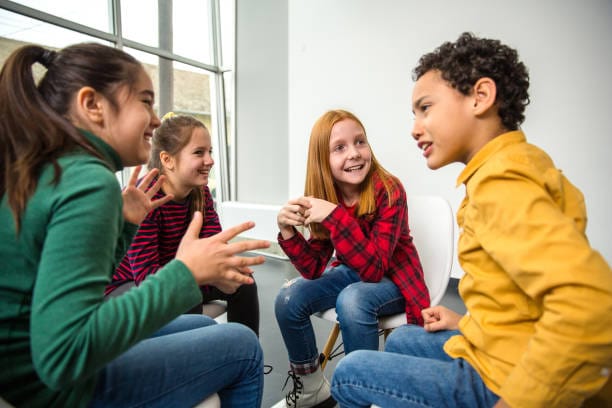
Words in Motion may offer individual therapy, caregiver coaching, and group-based support depending on scheduling, client needs, and availability. Group therapy can be helpful for practicing conversation, collaboration, problem-solving, and peer interaction in a supported setting.
Social communication therapy is available in office at the St. Petersburg clinic, through the mobile clinic across West-Central Florida, and virtually when appropriate. Mobile service areas may include Spring Hill, Lutz, Plant City, Tampa, Holiday, New Port Richey, and surrounding communities.
Testimonials
Serving St. Petersburg & West-Central Florida
Words in Motion proudly provides social communication and pragmatic language therapy in St. Petersburg and throughout West-Central Florida. In-office services are available at our St. Petersburg clinic, while mobile services may be available in areas such as Tampa, Spring Hill, Lutz, Plant City, Holiday, New Port Richey, Port Richey, Trinity, Clearwater, Largo, and surrounding communities.
Whether a client needs support with peer relationships, classroom communication, workplace conversations, self-advocacy, or everyday social problem-solving, Words in Motion provides therapy that is practical, respectful, and connected to real life.